

Key takeaways
- The panel protects the wiring in your walls. A breaker that trips is doing its job, and a bigger breaker is never the fix.
- Panel capacity matters most when you add electric loads such as a heat pump, an EV charger, or an electric range.
- Knob-and-tube, cloth-covered, aluminum, and ungrounded wiring all turn up in older local homes and deserve a professional look.
- GFCI and AFCI protection and whole-house surge protection address different hazards, and each is worth understanding.
- Work inside a panel or on live wiring is never a homeowner job.
What the electrical panel does
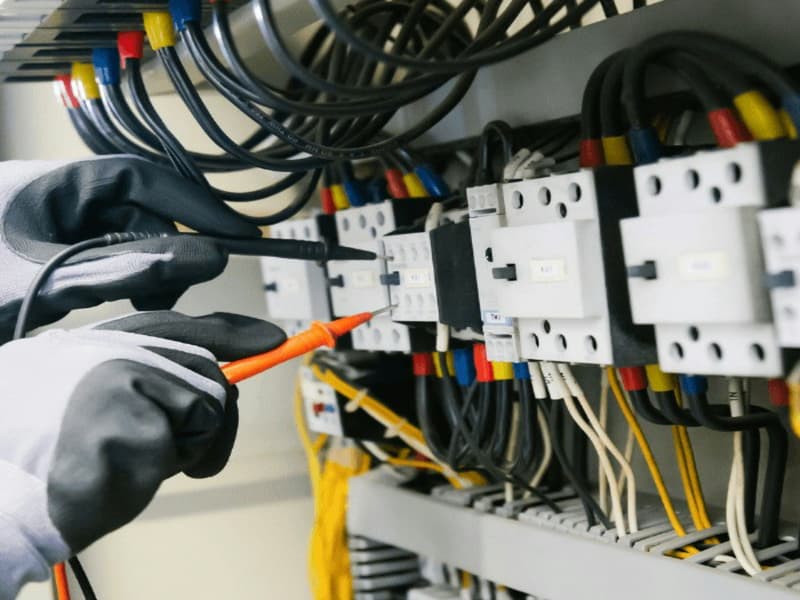
The panel is where power from the utility is divided into the circuits that run through your house. The main breaker at the top shuts off the whole house. Each smaller breaker protects one circuit, such as a kitchen counter, a bedroom, or the dryer.
A breaker has one job: to open the circuit when too much current flows, before the wire behind the wall overheats. The wire is the thing being protected. That is why each breaker is matched to the wire size on its circuit, and why putting in a larger breaker to stop nuisance tripping is dangerous. The wire can overheat inside the wall while the breaker never trips.
You will see two broad types of panel in this part of Ohio. Breaker panels are the norm in newer and updated homes. Older fuse boxes with screw-in fuses still turn up in houses that were never fully modernized, and sometimes as a leftover sub-panel in a basement or garage. The label on the door or inside the cover usually lists the amperage rating, and the main breaker is stamped with a number such as 100 or 200.
How much panel capacity a home needs
Capacity is measured in amps and describes how much power the whole house can draw at once. Many older homes in the Cincinnati, Dayton, and surrounding areas were built with a service on the smaller end, and a lot of them have never been increased. Newer homes commonly have a larger service because they were designed around more appliances and electronics.
A smaller service is not automatically a problem. A modest house with gas heat, gas cooking, and a gas water heater can run well on a smaller panel for years. Capacity becomes a question when you add load. The usual triggers are:
- central air conditioning, which matters in our humid summers
- an electric range, dryer, or water heater
- a heat pump replacing a gas furnace
- an EV charger
- a hot tub, a workshop, or a finished basement with its own circuits
The number of open slots in the panel and the capacity of the service are two separate limits. A panel can have room for more breakers and still not have the capacity to carry the extra load. It can also have plenty of capacity and no physical space left. An electrician settles this with a load calculation, which looks at what your home can actually draw. Adding up the breaker sizes does not give you the answer.
If you are planning a major addition, the panel upgrade conversation should happen before the equipment is ordered, not after.
Signs of an overloaded or failing panel
Some warning signs are easy to notice if you know what you are looking at:
- breakers that trip repeatedly, or fuses that blow often
- lights that dim when the air conditioner, dryer, or microwave starts
- a panel cover that feels warm, or a buzzing, crackling, or sizzling sound from the panel
- a burning smell near the panel or an outlet
- scorch marks, discoloration, or rust on the panel or breakers
- breakers that will not reset or feel loose in the panel
- extension cords and power strips running most of the house because there are not enough outlets or circuits
A single trip after you ran a space heater and a hair dryer together is normal. Repeated trips on the same circuit, heat, or a smell are not. The article on signs your panel needs an upgrade goes through each of these in more detail.
Do not open the panel cover to investigate. The main lugs and bus bars inside stay energized even with the main breaker off. If you notice heat, burning smells, or scorching, turn off what you can safely reach from the outside and call an electrician. If you see smoke or flames, leave the house and call 911.
Older wiring found in Southwest Ohio homes
Much of the housing stock in older neighborhoods across the region dates from the early and middle twentieth century. Wiring from those eras was built for far fewer devices than we plug in today. A few types come up often.
Knob-and-tube. Found in some of the oldest homes, this wiring uses individual conductors run through the framing on porcelain knobs and tubes. It has no ground wire. It was designed to shed heat into open air, so covering it with insulation or burying it in walls that have been sealed up can cause overheating. Altered or spliced knob-and-tube is a real concern.
Cloth-covered wiring. Insulation made of cloth or rubber becomes brittle with age. Cracked insulation can expose conductors, especially in attics, basements, and anywhere the wiring has been disturbed by renovation.
Aluminum branch wiring. Some homes built in the 1960s and 1970s used aluminum instead of copper for branch circuits. Aluminum expands and contracts differently, and connections at outlets and switches can loosen over time. Repairs need to use methods and devices rated for aluminum.
Two-prong outlets with no ground. These are common in older houses. Swapping in three-prong outlets without a ground wire behind them gives you a plug that looks safe but is not grounded. An electrician can tell you whether a circuit can be properly grounded or protected with GFCI instead.
Basements in this region can be damp, and old wiring there faces moisture and corrosion on top of age. Many older homes also have a patchwork of additions from different decades, with splices tucked into junction boxes nobody has opened in years.
None of this means an older house is unsafe by default. It means the wiring should be inspected before you add major loads, finish a basement, or insulate. If you see any of these types, an electrician can assess the condition and advise on rewiring or targeted repairs. Do not try to inspect or modify it yourself.
GFCI and AFCI protection
These are two different safety devices that are often confused.
A GFCI (ground-fault circuit interrupter) watches for current leaking out of the circuit, for example through a person standing in water. It cuts power in a fraction of a second. It is the reason you find GFCI protection in bathrooms, kitchens, garages, and outdoors.
An AFCI (arc-fault circuit interrupter) watches for the electrical signature of arcing, such as a damaged cord or a loose connection inside a wall, which can start a fire. Modern code requires it across most living areas in new work.
Existing homes are generally not required to be brought up to the newest rules until work is done, but adding protection is one of the more worthwhile safety upgrades for an older house. See GFCI and AFCI protection explained for where each is used and how to test them.
Surge protection
Summer thunderstorms are common here, and lightning is only one source of surges. Utility switching and large appliances cycling on and off also send brief spikes through the wiring. Over time they can shorten the life of electronics and appliances, and a large one can damage them outright.
Surge protection works in layers. A device installed at the panel limits what enters the house, and point-of-use protectors at sensitive equipment handle what gets through. Neither stops a direct lightning strike, and protectors wear out as they absorb surges. Many have an indicator light that tells you when they are no longer protecting anything. Replace them when they say so.
Installing a device at the panel means working inside it, which is a job for an electrician. Ask about whole-house surge protection if you have expensive electronics, a home office, or a history of storm damage.
Safety and when to call an electrician
Electrical work looks simple until something goes wrong, and it can go wrong without warning. Some things are fine for a homeowner: resetting a tripped breaker once, pressing the test buttons on GFCI outlets, and replacing a burned-out bulb. Everything else is better left to a licensed professional.
Call an electrician for any of the following:
- repeated tripping or blowing on the same circuit
- heat, buzzing, or burning smells from a panel, outlet, or switch
- aluminum, cloth-covered, or knob-and-tube wiring you want to change or build around
- a panel replacement, service upgrade, or new large circuit
- any work that requires opening the panel cover
Permits and inspections are normally part of panel and service work, and your local building department sets the requirements. An electrician familiar with your area will know how it works there.
If you are unsure whether something is urgent, get in touch and describe what you are seeing. If there is smoke, a fire, or someone has received a shock, call 911 first.
Frequently asked questions
Can I replace a breaker myself if it keeps tripping?
No. Opening the panel exposes energized parts, and a breaker that keeps tripping is a symptom of something else, such as an overloaded circuit, a fault, or a failing breaker. An electrician should find the cause rather than swap parts.
Is an older home with a 100-amp panel unsafe?
Not automatically. A 100-amp service can be enough for a smaller home with modest electric loads. It becomes a concern when you add large loads like an EV charger or a heat pump, or if the panel shows signs of wear. A load calculation by an electrician tells you where you stand.
Do I have to rewire my whole house if it has old wiring?
Not always. Depending on the type and condition of the wiring, an electrician may recommend targeted repairs, added protection, or partial rewiring. Knob-and-tube wiring that has been covered with insulation or heavily modified is more likely to need replacement.
Does whole-house surge protection stop lightning damage?
It reduces the risk from surges, but it cannot guarantee protection against a direct strike. It works best alongside point-of-use protectors for sensitive electronics, and it should be replaced if its indicator shows it has worn out.
7 min read.